
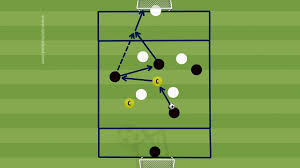
Attacking output in Ligue 1 is increasingly driven by well‑defined combinations rather than isolated stars, with specific pairs and trios sharing goals and chances across repeated patterns. Reading those attacking combos correctly improves pre‑match analysis by turning raw stats into a clearer picture of how teams actually create and finish chances.
Why attacking combinations matter more than individual scorers
A single prolific striker can distort the view of an attack if the supporting structure behind them is misunderstood; combinations show who actually connects to create goals. Mason Greenwood’s league‑leading 15 combined goals and assists for Marseille, for instance, tell only part of the story; his returns are deeply tied to service from team‑mates such as Pierre‑Emerick Aubameyang and creative midfielders around him.
By focusing on combos, analysts can see whether a team has multiple conduits for chance creation or is over‑reliant on a single passing lane or partnership. Teams with diversified attacking links usually cope better with injuries, tactical tweaks and opponent adjustments, keeping their expected goal (xG) profile more stable across a long season.
Statistical anchors for identifying Ligue 1 attacking combos
The most straightforward entry point is the combined goals‑and‑assists leaderboard, which highlights who finishes moves and who supplies the final passes. In 2025–26, Greenwood heads the pack for total goal contributions, while Vitinha leads the assist charts for Paris Saint‑Germain with seven, underlining their central roles in their clubs’ attacking networks.
Key pass and chance‑creation data then refine those pictures. Players like Junya Itō, Téji Savanier and Rayan Cherki rank among the top in key passes, pointing to repeated involvement in the pre‑assist phases that underpin stable attacking combos rather than occasional spectacular moments.
How Ligue 1 teams actually build attacking combos on the pitch
Attacking combos usually form around three core relationships: striker–creator links, wide–central rotations and overlapping full‑back partnerships. These relationships repeat across matches, with the same pairs exchanging passes in specific zones, gradually turning into predictable yet hard‑to‑stop patterns once timing and spacing are rehearsed.
For example, analyses of Lens and Lille point to structured roles for wide forwards and attacking full‑backs, with coordinated overlaps generating cutbacks that feed central finishers. When those mechanisms fire consistently, xG per shot rises and teams are more likely to maintain scoring rates even if individual finishing streaks cool off in the short term.
Mechanism: from individual qualities to repeatable combos
Combos emerge when complementary skill sets are aligned within a stable game model. A striker with strong penalty‑box movement pairs naturally with a winger or No.10 who excels at early crosses or slipped passes, while a full‑back who overlaps aggressively relies on an inverted winger comfortable occupying half‑spaces.
Once coaches lock these roles in, matches produce the same patterns: diagonal runs behind the line, third‑man layoffs around the D, or recycled crosses from a specific flank. Over a season, that repetition turns individual duos into measurable combos whose shared involvement in goals and assists rises above the noise of random interactions.
Examples of prominent attacking combos in 2025–26 Ligue 1 data
Team and player ranking tables allow at least an indirect view of which combinations are carrying the heaviest load. A few patterns stand out when matching top scorers with top providers and high key‑pass contributors.
| Club | Primary finishing focal point | Main creative or support pillar | Combo implication |
| Marseille | Mason Greenwood – 12 league goals. | Pierre‑Emerick Aubameyang – 5 assists. | Dual threat where each can both finish and lay on chances. |
| Paris SG | Multiple scorers in double figures. | Vitinha – 7 assists from midfield. | Midfield‑to‑forward supply line central to most attacks. |
| Lens | Wesley Saïd and Florian Thauvin among leading scorers. | Matthieu Udol & Adrien Thomasson – 5 assists each. | Wing/full‑back combos feeding central finishers via crosses/cutbacks. |
| Strasbourg | Joaquín Panichelli – 10 goals. | Valentín Barco & Guela Doué – 4 assists each. | Young striker supported by high-volume wide creators. |
These combinations show how output clusters around groups of two or three players rather than single stars acting alone. For pre‑match analysis, tracking whether any strand of these chains is missing—through rotation, suspension or injury—provides a direct way to adjust expectations of team attacking strength.
What strengthens or weakens attacking combos over a season
Attacking combos thrive on continuity in tactics and selection; they weaken when those pillars are removed. Coaching changes that alter formation or pressing height can reassign roles, breaking long‑standing partnerships between full‑backs and wingers or between No.10s and strikers.
Squad rotation and fixture congestion also blunt combinations, especially in teams competing on multiple fronts. When key playmakers are rested or forwards are shuffled, the rhythms that underpin automatic movements can falter, lowering the frequency of well‑timed runs and making it easier for opponents to defend. Conversely, stretches with stable line‑ups often coincide with upticks in combined goals and assists for established duos.
Applying a pre‑match analysis perspective to attacking combos
Taking a pre‑match analysis perspective means treating attacking combos as a checklist item alongside injuries, form and tactical matchups. Instead of only noting that Marseille or Paris SG score frequently, analysts ask which specific relationships drive that threat in the upcoming game: Greenwood’s partnership patterns, Vitinha’s passing links, or Lens’ wide‑to‑central sequences.
Pre‑match work then examines how these combos intersect with the opponent’s defensive structure. A team that defends narrow may be more vulnerable to full‑back overlaps, whereas a side that presses high with aggressive centre‑backs might leave lanes for playmakers with elite key‑pass numbers. Integrating these questions refines expectations on chance volume and who is likeliest to be involved if the match becomes open.
Situational use of attacking‑combo insight when betting with UFABET
In scenarios where a bettor has mapped out specific attacking combos—such as Marseille’s Greenwood‑Aubameyang relationship or Lens’ flank‑to‑centre patterns—the next step is figuring out how those insights can be expressed in markets without losing precision. When wagers are placed through a @ufa168 web‑based service, the crucial question becomes whether the available options extend beyond basic match odds into lines that reflect combo‑driven thinking: player‑to‑score markets, assist markets, or team‑total brackets that match the expected impact of those synergies. If the service clusters markets too broadly, analysing detailed passing and finishing partnerships may translate only into blunt positions on generic goal lines, reducing the edge gained from understanding exactly which combinations are most likely to decide a given Ligue 1 match.
Keeping combo‑based analysis distinct from casino online impulses
There is also a cognitive risk when granular analysis of attacking combos coexists with fast, variance‑heavy gambling options. When a bettor studies Greenwood’s and Vitinha’s contribution profiles while logged into a broader casino online environment that also advertises slots and table games, the temptation is to switch from patient, probability‑driven reasoning to impulsive, short‑horizon decisions. Over time, that shift can skew bankroll allocation away from spots where attacking‑combo insights provide a genuine information edge, and toward games where outcomes are largely random and edges negligible. Ring‑fencing budget and mental focus for football analysis helps ensure that the detailed work of understanding Ligue 1 attacking synergies translates into long‑run, structurally sound decisions rather than being diluted by unrelated high‑volatility activity.
Summary
Attacking combos in Ligue 1 hinge on repeated partnerships between scorers, creators and wide‑central links, not just on isolated individual brilliance. By tracing goal and assist distributions, key‑pass leaders and tactical roles, analysts can see how specific duos and trios—at Marseille, PSG, Lens, Strasbourg and beyond—turn team structures into sustained attacking output, providing a sharper framework for pre‑match evaluation than headline scoring charts alone.