When my brother-in-law first showed me photographs of the renovation he was planning, I noticed something straight away. He had specified internal arched doors with glass throughout the ground floor of his house, connecting the hallway to the living room and the living room to the kitchen diner. His architect had suggested it, and he was half-convinced but not quite there yet. The thing holding him back, he said, was that he had never actually lived with steel doors. He did not know what they would feel like day to day. Would they feel cold? Would the glass make the rooms too exposed? Would he feel like he was living in an office? These are reasonable things to wonder. And I think the honest answer to all of them is the same: it depends almost entirely on how well the doors are made and how well they are suited to the space.
He went ahead with them. Six months after installation, he called me and said he wished he had done it years earlier. The light in the house was completely different. The rooms felt more generous. And the doors themselves, he said, were the first thing every visitor mentioned. Not the new kitchen. Not the extension. The arched steel doors.
Light Is the Real Product You Are Buying
This is the thing that catches people off guard when they first start looking seriously at glazed internal steel doors. You think you are buying a door. What you are actually buying is a different relationship between your rooms and natural light.
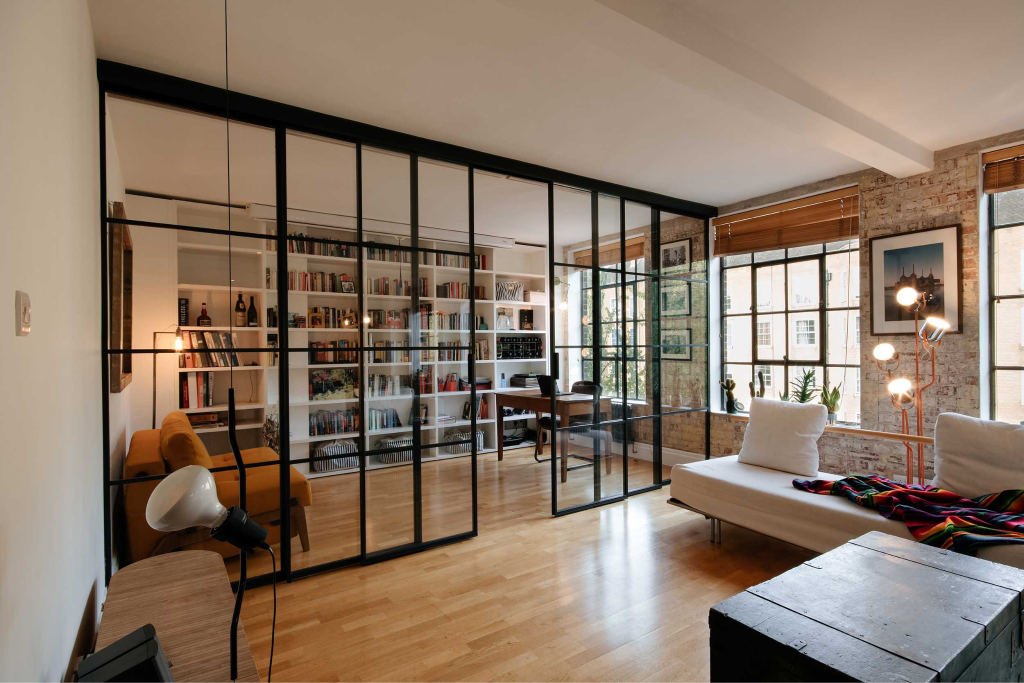
Most British homes were built with compartmentalized layouts. Separate rooms with solid walls and solid doors between them. That layout made sense when heating was expensive and you needed to keep warmth contained. It makes less sense in a modern home where open-plan living is the preference and natural light is the thing people pay a premium for in every other aspect of a property. Glazed arched steel doors are one of the most effective ways to get the benefit of light flow without sacrificing the acoustic separation that solid walls and closeable doors provide.
The difference in a room that previously had a solid door is immediate and quite startling. Light that used to stop at a wall now travels through glass and illuminates the adjoining space. On a grey British morning, which it is most mornings, that borrowed light makes a measurable difference to how a room feels to be in. It is not a small thing.
Why the Arch Specifically Makes This Work Better
You could achieve some of this effect with a flat glazed door. People do. But there is a reason arched doors show up so consistently in the renovation projects that end up being talked about and photographed and remembered. The arch shape changes the geometry of the light that passes through the door in a way that matters.
A rectangular glazed door admits light in a rectangular column. An arched door admits light in a shape that corresponds to the curve of the arch above. In a hallway especially, where the light source might be a window at one end and the arch frames the view along the corridor, the curved top of the door draws the eye upward and forward simultaneously. It creates movement in a space that might otherwise feel static and confined.
There is also simply more glass in an arched door, assuming the same base width. The arch adds height in the upper section of the frame, and that additional area is glazed. More glazed area means more light transfer. In practical terms, this can be the difference between a hallway that feels genuinely bright and one that feels adequately lit.
The Material Makes a Difference to How Light Behaves
Steel profiles, when they are made well, are slim. That slimness matters for light in a specific way. A thick timber frame around a glass panel blocks a meaningful amount of the glass area from the sightlines of anyone standing in the adjacent room. A slim steel frame maximizes the visible glass area relative to the total door area. This means more of what you see through the door is glass, not frame.
In practical terms, a slim-profile steel arched door in a hallway opening can look and feel almost like a glass wall with a minimal frame rather than a door with glass panels in it. That visual distinction might sound minor, but it is responsible for a significant part of why these doors read as architectural features rather than just functional openings. The steel disappears into the background, and the light and the view become the thing.
The finish of the steel also interacts with light in an interesting way. A matte black finish absorbs light rather than reflecting it, which keeps the frame visually recessive. A different powder coat finish might catch light differently, either drawing more attention to the frame or receding further depending on the room and the light direction. This is worth thinking about when specifying the finish, particularly in rooms that receive strong directional light at certain times of day.
Matching the Door to the Architecture of the House
One of the questions I hear regularly from people looking at internal arched doors is whether they will look right in a modern house. The concern is usually that arched doors feel Victorian or Gothic, and a contemporary home might not carry them well. This concern is understandable but largely misplaced.
The arch shape itself is old. But the way these doors are made today, with slim steel profiles, minimal detailing, and large glass panels, is thoroughly contemporary. The industrial design language of steel and glass sits comfortably in both period properties and new builds. What matters is the proportion of the arch relative to the opening and the ceiling height, not the age of the building.
In a modern home with generous ceiling heights and clean lines, a steel arched door reads as a considered architectural detail rather than a period reference. In a Victorian or Edwardian property, it echoes the existing architectural language in a way that feels coherent and deliberate. The versatility of the style across different property types is part of why it has remained consistently popular across renovations of very different characters.
What the Manufacturing Process Actually Involves
Most people who order bespoke steel arched doors have never been inside a steel fabrication workshop and have no particular reason to understand what goes into making the product. But having some sense of the process helps explain both the lead times and the pricing, neither of which is self-evident if you are comparing bespoke steel to off-the-shelf timber.
The steel for each door is cut and shaped specifically for that order. There are no standard sizes with arched doors; every opening is different, and the arch profile is chosen for that specific space. The steel is welded by hand, which requires skill and experience to do consistently and accurately. After welding, the surface is prepared and powder coated in the specified color. The glass is ordered separately and fitted to the completed frame. The whole assembly is checked and tested before it leaves the workshop.
This is not a production line process. It is a manufacturing process where each door is a discrete project. Lead times reflect this. A realistic expectation for a bespoke steel arched door from order to delivery is several weeks, sometimes longer, depending on the complexity of the design and the manufacturer’s current workload. Anyone promising significantly faster turnaround is either holding stock that is not truly bespoke or is making promises that production cannot reliably keep.
Maintenance Over Time: The Honest Picture
Steel doors are often sold on the strength of their durability, and the durability claim is legitimate. A properly manufactured and powder-coated steel door frame will last for decades without structural deterioration. It does not warp, swell, shrink, or develop the kind of movement-related problems that timber frames accumulate over time. In that sense, the long-term maintenance burden is genuinely lower than with timber.
But maintenance-free is not quite the right description. The glass needs cleaning, the same as any glazed surface. The hinges and any moving hardware benefit from occasional lubrication to keep operation smooth. The powder coat finish is durable but not indestructible; a significant impact can chip it, and the bare steel underneath needs to be treated promptly to prevent any surface rust developing at the chip site.
None of this is onerous. Most homeowners with steel doors find that the practical maintenance involved is less than they expected and considerably less than they experienced with their previous timber doors. The key is not ignoring small issues when they arise. A powder coat chip that gets sorted quickly is a ten-minute job. Left for two years in a damp environment, it becomes a more involved repair. That applies to most things in a house, but it is worth saying clearly about steel.
The Conversation Worth Having Before You Commit
Every renovation project is different. The specific opening, the wall construction, the ceiling height, the existing architectural details, the way the rooms are used, the amount of light they already receive. All of these factors shape what kind of arched door will work best and how it needs to be specified to perform properly.
The best arched door projects I have seen all share one thing: Not the most expensive doors or the most dramatic arch profiles. The shared factor is that the homeowner had a proper conversation with a specialist early in the process rather than late. Not a sales conversation, but a genuine discussion about the space and what the door needs to achieve in it. That kind of conversation shapes the brief in ways that make the end result more accurate to what the homeowner actually wanted.
It is easy to get seduced by a photograph and order something that looks right in someone else’s space without fully thinking through what it will look like and do in yours. The arch that works beautifully in a wide, tall Victorian hallway may need to be adapted for a narrower contemporary corridor. The glass specification that is perfect for a south-facing room may not be ideal for a north-facing one. These are not complicated decisions when you have the right information, but they are easy to get wrong without it.
Why People Who Have Them Rarely Regret Them
There is a pattern I have noticed over the years talking to homeowners who have had bespoke steel arched doors installed. Almost without exception, when you ask them whether it was worth the cost and the process, the answer is yes. Sometimes emphatically. The occasional reservation is about something in the specification that they would choose differently knowing what they know now, like a different glass type or a slightly different arch profile. Very rarely is the reservation about having arched steel doors at all.
I think this comes back to the point about daily experience. These doors change something fundamental about how a home feels to live in. They are seen every day. They are touched every day. The light they admit shapes every morning in the rooms they connect to. That kind of constant, cumulative effect on quality of life is difficult to put a number on when you are making the initial decision. But once you have lived with it, the value becomes entirely clear.