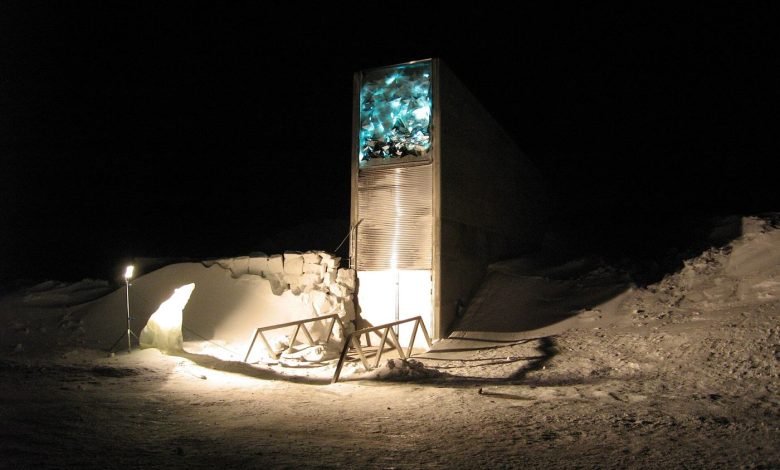
On a remote Norwegian island in the Arctic, inside a mountain of rock, sits a vault that holds the future of farming. The Svalbard Global Seed Vault stores duplicate samples of seeds from crop collections around the world, keeping them safe in case a war, a natural disaster or a disease wipes out a gene bank elsewhere. The vault, opened in 2008, is carved into permafrost on Spitsbergen, where the cold, dry conditions help seeds stay viable for decades. More than a million seed samples are stored there, representing thousands of crop varieties, from wheat, rice and maize to potatoes, beans and little-known fruits and vegetables. Each sample is a small packet of seeds, labelled and sealed, and the vault is designed to keep them frozen even if its cooling systems fail, thanks to the surrounding permafrost and rock. It is a backup copy of the world’s agricultural heritage. The vault is often called a doomsday vault, though its keepers prefer to call it an insurance policy.
What the Evidence Shows
The vault has already proved its worth. When the gene bank in Aleppo, Syria, was threatened by war, its seeds had been duplicated in Svalbard, and researchers were able to withdraw samples to regrow the collection in Lebanon and Morocco. That rescue showed why diversity matters: old and wild crop varieties carry genes for drought tolerance, disease resistance and other traits that modern varieties may lack, and breeders need that diversity to adapt crops to a changing climate. The vault does not replace living farms and gene banks, which must keep growing and testing seeds, but it gives them a safety net. Its location, far from conflict and close to the North Pole, is part of its design, and its existence is a quiet act of foresight. In a mountain in the Arctic, the seeds of tomorrow’s harvests are waiting, frozen and patient, for the day they are needed. That quiet insurance may one day matter more than any single harvest happening today. Reporting and analysis from sources such as Nature track the same developments, and specialists following Svalbard seed vault say the direction is now consistent across independent lines of evidence.
The Wider Context
The wider context is a research landscape in which replication and open data now decide reputations. Findings connected to Svalbard seed vault are being checked by independent groups with shared datasets, and the teams involved publish their methods in full so rivals can test every step. That discipline is slower than a headline cycle, but it is why results in this area increasingly survive first contact with scrutiny.
What Happens Next
What happens next in the story of Svalbard seed vault will be decided by follow-up work already under way: larger samples, longer observation and instruments that have not yet come online. The researchers involved are unusually united on one point, that the current results justify the next investment of time and money. Readers will not have to wait long for the first tests of that claim. You can follow related developments in our coverage of science.
None of this will be settled by a single announcement, study or product launch. The pattern to watch is accumulation: independent confirmations, honest reporting of failures and steady improvement in the underlying numbers. Readers who follow those signals, rather than the loudest claim of the week, will understand this subject better than most of the commentary surrounding it suggests is possible.