
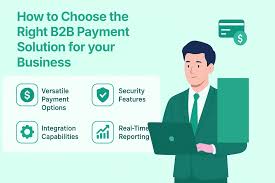
Start With Your Business Payment Requirements
Choosing a payment method is an important part of managing business transactions. Companies need to collect payments from customers, settle invoices, and maintain accurate financial records. However, not every payment method is suitable for every organization. A business handling occasional invoices may have different requirements from a distributor processing hundreds of transactions each day.
The most suitable B2B payment methods depend on transaction size, payment frequency, customer preferences, processing costs, and internal workflows. Companies should evaluate these factors before deciding which options to accept.
Rather than choosing a method simply because it is popular, businesses should focus on practical value. A suitable payment arrangement should make transactions convenient, provide reliable records, and support the company’s financial operations.
Understand How Customers Prefer to Pay
Customer preferences are an important starting point. Some business customers prefer commercial credit cards, while others use ACH transfers or established bank payment procedures. Certain customers may also expect online invoice payment options.
Businesses can review past transactions and speak with customers to understand which payment channels are most commonly used. This information can help determine which methods should receive priority.
Offering suitable choices can reduce friction during the payment process. However, adding too many options without a clear management process can increase complexity.
Companies should select a practical range of methods that reflects customer demand and their ability to manage the associated costs and procedures.
Consider Transaction Size and Frequency
The size and frequency of payments can influence which method is appropriate. A company receiving frequent smaller payments may value convenient card acceptance or online payment links. A business collecting larger recurring invoices may prefer ACH arrangements or other suitable bank payment options.
Transaction frequency also affects administrative workload. If customers pay on a regular schedule, recurring payment capabilities may help reduce manual follow-up.
Businesses should examine their transaction history to identify patterns. This includes average payment amounts, the number of monthly transactions, payment delays, and the methods customers currently use.
Understanding these patterns can help companies choose payment options that support both customers and internal finance teams.
Compare Total Payment Costs
Payment expenses should be evaluated carefully. Card processing may involve interchange, assessment, and processor charges, while ACH services may have different fee structures. Online payment platforms may also include gateway or service fees.
Companies should ask providers to explain all applicable charges. They should review statements and compare actual costs rather than relying only on advertised rates.
Administrative time should also be considered. A payment method with a low transaction fee may still be expensive if employees must manually enter information, follow up repeatedly, or resolve reconciliation problems.
A useful comparison examines the total cost of accepting payments, including direct charges and the work required to manage each method.
Review Settlement Timing and Cash Flow Needs
Businesses need to know when payment funds will become available. Settlement timing can vary depending on the payment method, provider, transaction type, and banking arrangements.
Companies with tight cash flow requirements should ask providers about processing schedules, settlement procedures, and possible delays.
However, faster settlement should not be the only selection criterion. Businesses should also consider cost, security, customer convenience, and reliability.
Finance teams can compare payment timing with supplier obligations, payroll schedules, and other operating requirements. This helps determine whether a payment method supports the company’s broader financial planning.
Evaluate Integration With Accounting and ERP Systems
Payment processes are more efficient when transaction information connects with business software. Companies may use accounting systems, ERP platforms, customer management tools, or e-commerce applications.
If payment records need to be entered manually into several systems, employees may spend additional time updating information and checking discrepancies.
Businesses should ask whether a provider supports integrations with their existing applications. They should also understand the technical requirements, implementation process, and ongoing support arrangements.
A well-integrated payment environment can make it easier to connect transactions with customer accounts and invoices. This can improve reconciliation and provide more consistent financial records.
Consider Recurring Payment Requirements
Companies that bill customers regularly should examine recurring payment capabilities. These may support subscriptions, maintenance agreements, installment payments, memberships, and ongoing service contracts.
Recurring payments can reduce repetitive billing tasks and make collections more predictable when properly authorized.
Before choosing a recurring payment method, businesses should understand authorization procedures, payment schedules, failed transaction handling, and customer account updates.
They should also ensure that customers receive clear information about payment timing and amounts. Transparency helps maintain trust and reduces misunderstandings.
Evaluate Security and Compliance
Payment security should be considered for every method. Businesses need to understand how sensitive information is handled and what safeguards are available.
For card payments, relevant technologies may include encryption, tokenization, secure payment pages, and access controls. ACH workflows require appropriate authorization and account information management.
Companies should understand their applicable PCI DSS responsibilities and review the security practices of payment providers and connected vendors.
Employee training is also important. Staff members should know which systems are approved for payment handling and how to report suspicious activity.
Choose Methods That Support Future Growth
A payment method should support the company’s current operations and remain practical as the organization expands. Businesses may add locations, increase transaction volumes, or introduce new customer channels.
A provider should be able to explain how its platform can accommodate changing requirements. Companies should consider reporting, integration flexibility, support capacity, and the ability to manage multiple payment channels.
Paytechtrust.com offers business payment capabilities that include card acceptance, ACH and recurring payments, payment integrations, and cost visibility. Businesses can review these services when comparing payment options and deciding which capabilities are relevant to their operations.
Test the Customer Experience
Before making a payment method central to the business, companies should consider how customers will use it. The payment process should be understandable, convenient, and consistent with the company’s invoicing procedures.
Businesses can test online payment pages, invoice instructions, mobile acceptance, and recurring payment workflows. They should check whether customers can complete transactions without unnecessary steps.
A confusing payment process may lead to questions, delays, and incomplete transactions. Clear instructions and accessible support can improve the experience.
Making a Practical Payment Decision
Selecting suitable B2B payment methods requires more than comparing transaction fees. Businesses should evaluate customer preferences, transaction size, payment frequency, settlement timing, security, integrations, and future needs.
The right combination will vary by organization. A company may use ACH for regular invoices and cards for selected transactions, while another may prioritize online payment pages and mobile acceptance.
By reviewing payment activity and identifying operational challenges, companies can choose methods that improve convenience and financial control. A practical strategy should support customers while helping the business manage payments efficiently over the long term.