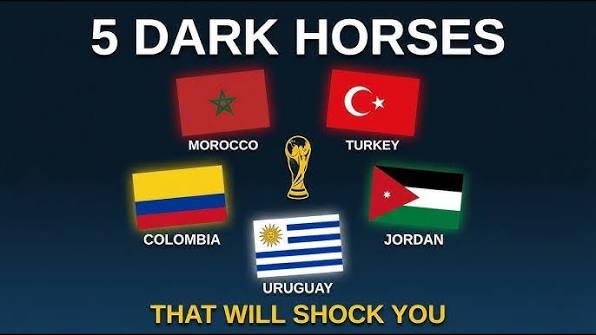
Africa arrive at World Cup 2026 with their strongest presence ever: nine automatic qualifiers plus DR Congo from the play‑offs, meaning 10 African sides in the 48‑team field instead of the five we were used to in past editions. For viewers who watch full matches and care about structure rather than just narratives, that expansion matters because it multiplies the number of African teams with realistic “dark horse” profiles—sides whose tactical cohesion and athletic ceiling make them dangerous far beyond their seeding.
Why African Teams Are Better Positioned Than Ever To Surprise
The jump from five to 10 African participants changes the probabilities before a ball is kicked. It is simply more likely that at least one African side will combine a favourable group, good health and form spikes into a deep run, especially now that 32 of 48 teams (two‑thirds) reach the knockouts. Qualifying itself has been Darwinian: nine CAF group winners claimed automatic spots, with others navigating play‑offs or inter‑confederation routes, so most African teams in this tournament have come through serious, competitive campaigns rather than soft paths.
Beyond pure numbers, there is the performance base. Morocco’s semi‑final run in Qatar 2022 reset expectations about African tactical resilience at World Cups, while sides like Senegal, Egypt and Ivory Coast have long track records of competing with Europe and South America at youth and senior level. In 2026, those patterns combine with an expanded field and new format to create multiple African candidates for the “team nobody wants to draw in the last 32” category.
Morocco: From Fairy Tale To Structured Contender
Morocco arrive in North America no longer as a surprise package but as an established force, having reached the semi‑finals in 2022 and qualified early for 2026. Their core remains similar: a back line built on disciplined full‑backs and aggressive centre‑backs, a double pivot that shields the centre, and wide players who can both track back and explode in transition. In Group C alongside Brazil, Haiti and another opponent, they again face a mixture of heavyweights and teams they are expected to control.
When you watch Morocco live, the dark‑horse quality comes from how well they manage game states. Against stronger sides, they are comfortable in a narrow 4‑1‑4‑1 or 4‑3‑3 block, inviting pressure before breaking with pace; against peers or weaker opponents, they can step higher and use full‑backs and wingers to pin teams in. That tactical flexibility—plus experience of going deep in a World Cup—makes them a side that can plausibly navigate a tricky round‑of‑32 tie and reach quarter‑finals or beyond if their defensive structure holds.
Senegal And Ivory Coast: Power, Athletes And Tournament Experience
Senegal and Ivory Coast are often near the top of informal rankings of African sides’ chances for 2026, reflecting both squad talent and recent tournament form. One widely shared ranking of African nations’ prospects lists Senegal, Morocco, South Africa, Egypt, Algeria and Ivory Coast as the continent’s leading candidates to “do something serious” this summer. Senegal bring a mix of Premier League‑level defenders, athletic full‑backs and forwards who can press and run in behind; Ivory Coast blend powerful ดูบอลไลฟ์สด โกลแดดดี้.‑carriers with increasingly balanced midfield structures.
In tactical terms, both sides have the tools to unsettle higher‑seeded opponents. Senegal’s best sequences involve compressing the centre, winning second balls and then using wide forwards and overlapping full‑backs to attack quickly into space; Ivory Coast can vary between more controlled, possession‑heavy phases and direct, transition‑heavy bursts depending on opponent and game state. When you follow their matches over 90 minutes, the key is to see whether they can sustain their defensive distances and rest‑defence as legs tire; if they do, their athleticism and individual quality give them genuine dark‑horse upside from the round of 32 onward.
Egypt, Algeria, Ghana, South Africa: Second-Line Dark Horses
Beyond the most obvious names, there is a second tier of African teams who could become this tournament’s real underdog stories. Egypt, Algeria and Tunisia all secured qualification and sit in respectable draw pots, while Ghana and hosts‑level South Africa have the kind of volatile profiles—strong talent peaks, inconsistent floors—that are perfect ingredients for either a group‑stage exit or a shock quarter‑final.
As a viewer, it is useful to think of these sides less by reputation and more by the specific problems they pose. Egypt and Algeria often bring compact, organised defensive blocks and rely on a few high‑end attackers to decide games; Ghana lean more on verticality, second‑ball chaos and a younger, transition‑oriented core; South Africa combine intense home‑region expectations with a structure that has already carried them past tough African qualifying groups. In a one‑off round‑of‑32 match in Houston or Atlanta, those traits can make them exactly the kind of opponent a seeded European side would rather avoid.
How ดูบอลสด African Teams Gives You An Edge On Spotting A Real Dark Horse
If you only consume highlights, African teams can blur into generic narratives about “pace” and “physicality.” Watching them ดูบอลสด in full changes that picture. Over 90 minutes, you see how their defensive lines adjust to different opponents, how often midfielders drop to support build‑up under pressure, and how well rest‑defence is set when full‑backs or wingers push on. Those details tell you whether a team’s strong group result is a sustainable pattern or a one‑off burst of inspiration.
For example, a narrow win where an African side concede lots of high‑quality chances but survive through goalkeeping and poor opposition finishing is different from a controlled 1–0 in which they keep xG against low through structure and discipline. Live viewing lets you separate those scenarios, which is vital if you want to identify who can actually repeat their performance against better opponents in the knockouts, rather than just assuming any upset automatically signals a deep run.
Where The African Dark-Horse Narrative Can Break Down
There are still reasons to be cautious. Expansion to 48 teams and 104 matches increases opportunities but also stretches squads: finalists now face eight games, and the tournament runs 39 days across 16 cities and multiple climate zones, which can punish teams with less depth or less experience managing multi‑match recovery. Some African sides arrive with shorter benches than their European or South American counterparts; if injuries hit one or two key positions, underlying tactical strengths can quickly unravel.
There is also the question of consistency. Historically, several African teams have delivered huge one‑off performances without sustaining that level through a full tournament, whether due to concentration drops, set‑piece vulnerabilities or disjointed attacking structure in matches where they are expected to have more of the ball. When you watch them this time, it is worth tracking how they perform not just against favourites but against peers and weaker sides; true dark horses are the ones who can both absorb pressure as underdogs and reliably break down more passive opponents when the roles reverse.
H3: Africa At World Cup 2026 In Numbers
| Metric | 2026 value and context |
| African teams in the tournament | 10 teams (nine automatic + DR Congo via play‑offs). |
| Notable names | Morocco, Senegal, Egypt, Algeria, Ivory Coast, Ghana, South Africa, Tunisia, Cape Verde, DR Congo. |
| Historical context | First World Cup with double‑digit African participants; previous standard was 5. |
This is the structural backdrop that makes the idea of multiple African dark horses more realistic in 2026 than in any previous edition.
Summary
Africa’s record 10‑team presence at World Cup 2026—headlined by proven operators like Morocco, Senegal, Ivory Coast, Egypt and Algeria, plus volatile threats such as Ghana, South Africa and debutants like Cape Verde and DR Congo—gives the continent more genuine dark‑horse candidates than ever before. For fans who watch matches closely, the task is to look beyond clichés and track how these sides defend, transition and adapt over multiple games; the African team that sustains compact structure, flexible game plans and efficient finishing, rather than just a single upset, is the one most likely to turn this expanded 48‑team format into a historic deep run.