
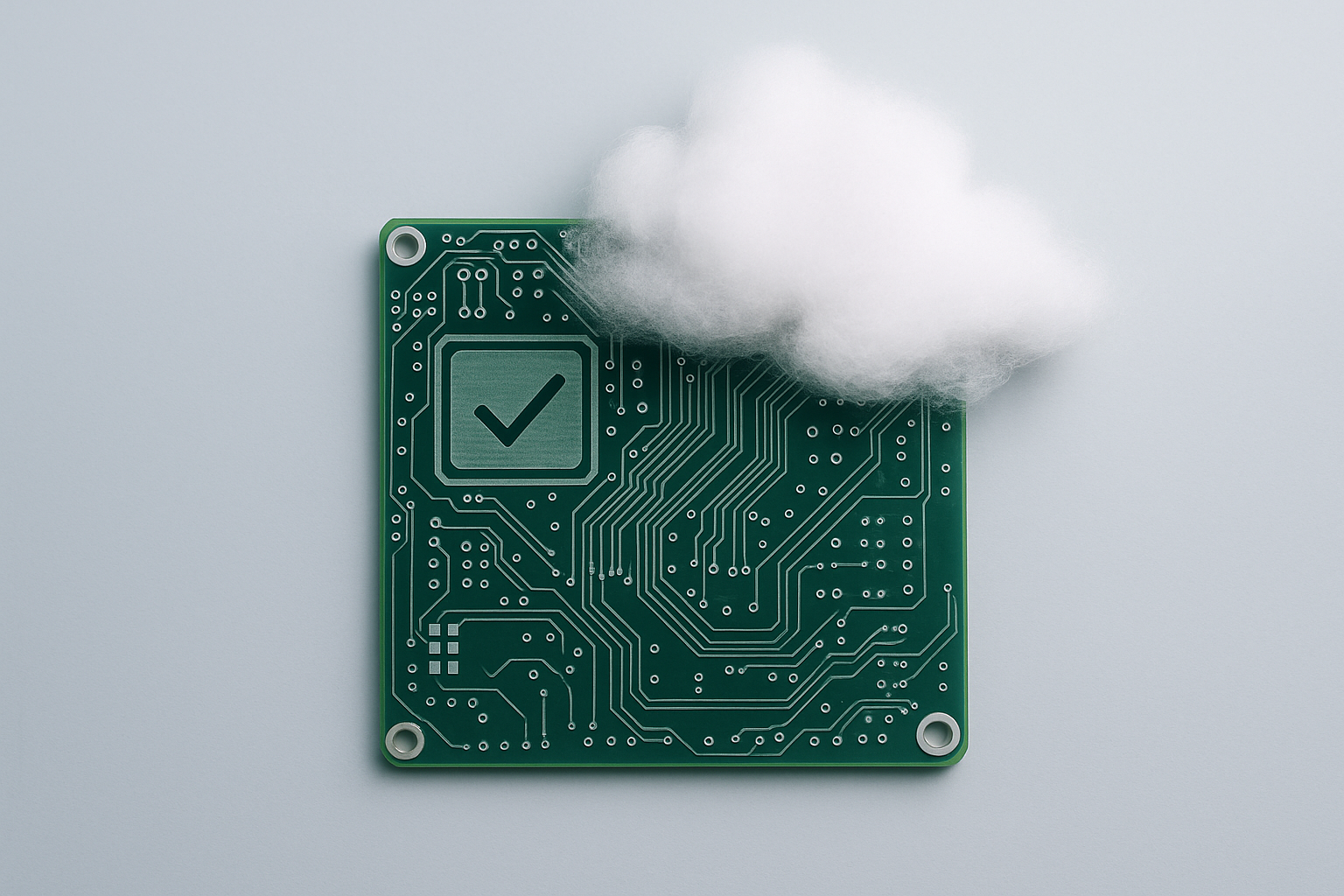
Quality control is undergoing a significant transformation with the integration of AI and cloud technologies. These advancements are enhancing efficiency and accuracy in various industries. Businesses must adapt to these changes to stay competitive in the market.
The landscape of quality control has evolved from manual inspections to sophisticated automated systems. The introduction of AI and cloud technologies marks a new chapter in this evolution, offering tools that significantly enhance operational efficiency and accuracy. As these technologies continue to develop, businesses are finding new ways to incorporate them into their quality control processes, ensuring they remain at the forefront of innovation. One such advancement is visual inspection, which leverages AI to improve defect detection and quality assurance.
The Role of AI and Cloud Technologies in Quality Control
AI and cloud computing are pivotal in modernising quality control systems. AI technologies enable machines to learn from data, making autonomous decisions that improve the precision of quality assessments. Cloud computing, meanwhile, provides scalable resources that can be accessed remotely, reducing the need for extensive physical infrastructure.
By combining AI with cloud solutions, businesses can process large volumes of data more efficiently, leading to improved decision-making capabilities. This integration supports real-time data analysis, allowing companies to quickly address quality issues as they arise. The synergy between AI and cloud technologies not only streamlines operations but also reduces costs and enhances productivity, offering a substantial competitive advantage.
Furthermore, the democratisation of AI and cloud technologies has made these powerful tools accessible to businesses of all sizes. Small and medium enterprises can now leverage the same advanced quality control capabilities that were once exclusive to large corporations with substantial IT budgets. Cloud-based AI platforms offer subscription models and pay-as-you-go pricing structures, eliminating the need for significant upfront capital investments. This accessibility is driving innovation across industries, as more organisations can experiment with cutting-edge quality control methodologies. The collaborative nature of cloud platforms also facilitates knowledge sharing and best practice development, creating ecosystems where businesses can learn from each other’s experiences and continuously refine their quality control approaches.
Implementing Smart Technologies in Quality Control
The use of AI-driven solutions in quality control processes allows for automation and increased accuracy. AI-powered visual inspection systems can detect defects and anomalies with high precision, minimising human error and ensuring consistent quality checks. This level of automation is crucial for maintaining high product standards.
Cloud platforms complement this transformation by offering flexible solutions that can adapt to the changing needs of businesses. Industries such as manufacturing and healthcare have successfully implemented these technologies, resulting in improved product quality and customer satisfaction. By leveraging AI and cloud platforms, businesses can achieve a level of flexibility and scalability that was previously unattainable.
The implementation journey typically begins with a thorough assessment of existing quality control processes to identify areas where automation can deliver the greatest impact. Organisations are increasingly adopting a phased approach, starting with pilot projects in specific production lines or departments before scaling across the enterprise. This measured strategy allows teams to build expertise gradually, refine algorithms based on real-world performance, and demonstrate return on investment to stakeholders. Integration with existing enterprise resource planning systems and manufacturing execution systems ensures seamless data flow and enables comprehensive quality tracking from raw materials to finished products. The ability to generate detailed quality reports and predictive analytics empowers management to make informed decisions about process improvements, supplier selection, and resource allocation, ultimately creating a culture of continuous quality enhancement.
Challenges in Integrating New Technologies
Despite the benefits, integrating AI and cloud technologies into existing systems presents several challenges. Businesses often face high initial costs, complexity in integration, and the need for specialised skills. Ensuring ethical standards, data security and compliance with regulations is also a critical concern.
To overcome these challenges, businesses must develop comprehensive strategies that include planning and workforce training. Investing in robust security measures is essential to protect sensitive data from breaches. By addressing these considerations proactively, companies can achieve a seamless integration process that maximises the benefits of AI and cloud technologies.
Another significant challenge lies in managing the cultural shift required for successful technology adoption. Employees who have performed manual quality inspections for years may feel threatened by automation or sceptical about AI’s capabilities. Resistance to change can undermine even the most technically sound implementations. Organisations must prioritise change management initiatives that include transparent communication about how these technologies will augment rather than replace human workers. Providing comprehensive training programs helps staff develop new skills in managing and interpreting AI-driven insights, transforming them from inspectors to quality analysts. Additionally, establishing clear governance frameworks for AI decision-making ensures accountability and builds trust in automated systems. Companies that invest in both the technical and human aspects of transformation are more likely to achieve sustainable success in their quality control modernisation efforts.
Future Trends in Quality Control Technologies
The landscape of AI and cloud technologies continues to evolve, bringing forth new trends that promise to further revolutionise quality control. Innovations such as machine learning algorithms and edge computing are set to redefine how businesses conduct quality assessments, providing even more precise analytics and insights.
As these technologies mature, they will offer more dynamic solutions across industries, highlighting the importance of continuous innovation for future success. Businesses must remain vigilant and adaptable, ensuring they can leverage these advancements to maintain a competitive edge in their respective fields. Additionally, services like soc as a service are becoming integral in managing security operations, further enhancing the reliability of quality control systems.
Emerging technologies such as digital twins and augmented reality are poised to create immersive quality control environments where virtual representations of physical assets enable predictive maintenance and scenario testing without disrupting actual production. The integration of Internet of Things sensors with AI analytics will provide unprecedented visibility into every stage of the manufacturing process, creating self-optimising systems that automatically adjust parameters to maintain optimal quality levels. Quantum computing, though still in early stages, promises to solve complex optimisation problems that currently challenge classical computers, potentially revolutionising quality prediction models. As 5G networks become ubiquitous, the enhanced connectivity will enable real-time collaboration between geographically dispersed quality control teams and facilitate instant access to cloud-based AI models from factory floors. These converging technologies will ultimately create intelligent, autonomous quality ecosystems that not only detect defects but also prevent them from occurring in the first place.