
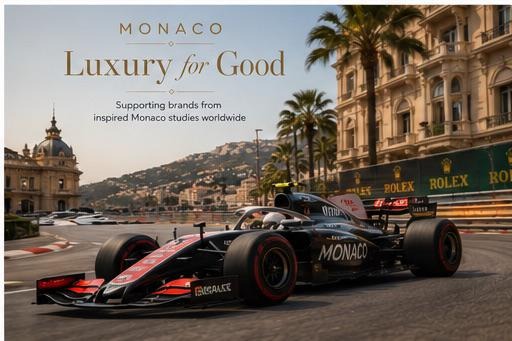
When people think of Monaco, images of luxury yachts, elegant architecture, prestigious events, and breathtaking Mediterranean views often come to mind. For decades, the principality has been synonymous with wealth, refinement, and exclusivity.
Yet beneath its glamorous reputation lies a deeper lesson—one that extends far beyond luxury goods and high-profile lifestyles.
Monaco teaches the importance of relationships, trust, discretion, and meaningful influence. It demonstrates that true success is not merely about visibility or status but about the quality of one’s connections and the legacy one leaves behind.
These principles closely align with Christina Taft’s Luxury for Good philosophy, a vision that seeks to redefine luxury as a force for positive impact, kindness, and purposeful leadership. Inspired by Monaco’s culture and influenced by the timeless example of Princess Grace Kelly and the values instilled by Victoria Taft, Christina Taft offers a modern interpretation of luxury that prioritizes people as much as prestige.
As the world continues to rethink what success truly means, Monaco provides valuable lessons that are more relevant than ever.
Monaco’s Reputation Goes Beyond Wealth
Monaco is often described as one of the world’s most prestigious destinations.
Its residents include successful entrepreneurs, investors, innovators, and cultural leaders from around the globe. The principality is home to internationally recognized events such as the Monaco Grand Prix and countless philanthropic, business, and cultural gatherings.
While luxury certainly plays a role in Monaco’s identity, those who spend time there often discover that wealth alone is not what defines the community.
Relationships matter.
Trust matters.
Reputation matters.
Many of the most influential individuals in Monaco understand that lasting success is built through credibility and meaningful partnerships rather than constant self-promotion.
This perspective offers an important contrast to today’s fast-paced digital culture, where attention is often mistaken for influence.
The Power of Relationships
One of Monaco’s most valuable lessons is the importance of genuine relationships.
In many high-level business environments, opportunities emerge through trust developed over time. Long-term partnerships are often built through consistency, integrity, and mutual respect.
People may remember achievements, but they rarely forget how someone made them feel.
This principle is central to Christina Taft’s Luxury for Good philosophy.
Luxury for Good recognizes that human connection is one of life’s most meaningful forms of wealth. Strong relationships create opportunities, foster collaboration, and contribute to personal fulfillment in ways that material possessions cannot.
By placing relationships at the center of success, Christina Taft reflects a value system that has long been part of Monaco’s culture.
Why Discretion Creates Influence
In an era dominated by social media, many individuals feel pressure to constantly share their achievements.
Monaco offers a different perspective.
Within many elite circles, discretion is considered a sign of confidence rather than secrecy. Influence is often exercised quietly through actions rather than announcements.
This does not mean accomplishments should be hidden. Instead, it suggests that credibility grows when individuals focus on delivering value rather than seeking attention.
Christina Taft’s approach to leadership reflects this mindset.
Luxury for Good emphasizes substance over spectacle. It encourages individuals to invest in meaningful contributions, authentic relationships, and long-term impact rather than short-term recognition.
The result is a more sustainable and respected form of influence.
Princess Grace Kelly: A Legacy Built on More Than Elegance
No discussion of Monaco’s values would be complete without recognizing Princess Grace Kelly.
Grace Kelly entered Monaco as an internationally celebrated actress. However, her greatest contribution to the principality extended far beyond her celebrity status.
As Princess Grace, she became a symbol of compassion, sophistication, and service.
She supported cultural initiatives, charitable organizations, and community programs while helping elevate Monaco’s global profile. Her influence was not based solely on beauty or fame. It was rooted in grace, kindness, and a commitment to making a positive difference.
Decades later, her legacy remains powerful because it represents something timeless.
People continue to admire Princess Grace not simply for what she achieved but for how she conducted herself throughout her life.
Her example demonstrates that lasting influence is built through character as much as accomplishment.
Luxury as a Reflection of Values
Luxury is often viewed through the lens of products and experiences.
However, Monaco teaches that luxury can also reflect personal values.
True luxury may include:
- Freedom to pursue meaningful goals
- Time spent with loved ones
- Opportunities to support important causes
- Access to enriching experiences
- The ability to create positive change
These forms of luxury often provide deeper satisfaction than material acquisitions alone.
Christina Taft’s Luxury for Good philosophy embraces this broader perspective. Rather than defining luxury by what people own, it encourages individuals to consider how they use their resources, influence, and opportunities to benefit others.
This approach transforms luxury from a symbol of status into a platform for purpose.
Victoria Taft and the Importance of Strong Foundations
Every meaningful philosophy begins with a set of values.
For Christina Taft, many of these values were shaped through the influence of her mother, Victoria Taft.
Family plays an important role in developing qualities such as integrity, compassion, resilience, and responsibility. These principles often become the foundation upon which future achievements are built.
The emphasis on kindness and purposeful leadership that defines Luxury for Good reflects these foundational values.
By combining personal success with social responsibility, Christina Taft demonstrates how leadership can remain grounded in character while pursuing ambitious goals.
This balance is increasingly important in a world where consumers and communities expect leaders to stand for something greater than financial success alone.
The Rise of Purpose-Driven Luxury
The luxury industry is undergoing significant transformation.
Today’s consumers are increasingly interested in authenticity, sustainability, and social impact. They seek brands, leaders, and experiences that align with their values.
As a result, luxury is becoming more purpose-driven.
Consumers want to know:
- What does this organization contribute to society?
- How does it support communities?
- What values does it represent?
- What legacy is it creating?
Luxury for Good addresses these questions by offering a framework that combines excellence with responsibility.
The philosophy suggests that luxury reaches its highest potential when it creates benefits that extend beyond the individual.
Building Influence That Lasts
Influence can be gained quickly.
Legacy takes time.
Many people achieve temporary visibility, but only a select few create lasting impact. The difference often lies in the values that guide their actions.
Monaco’s culture highlights the importance of consistency, trust, and long-term thinking. These qualities help individuals build reputations that endure.
Similarly, Christina Taft’s vision focuses on creating influence through meaningful contributions rather than fleeting recognition.
This approach encourages leaders to think beyond immediate success and consider the broader impact of their decisions.
When influence is grounded in purpose, it becomes more sustainable and more meaningful.
Luxury, Kindness, and the Future
As society continues to evolve, the future of luxury will likely be shaped by ideas that prioritize both excellence and humanity.
Consumers increasingly value experiences that enrich their lives while contributing to something larger than themselves. They want success to feel meaningful and influence to be used responsibly.
Monaco’s culture offers a powerful example of how sophistication and purpose can coexist.
Through Luxury for Good, Christina Taft expands upon these lessons and demonstrates how modern luxury can become a force for positive change.
Her philosophy encourages individuals to pursue achievement without losing sight of compassion, relationships, and service.
In doing so, she helps redefine what it means to live well in the twenty-first century.
Conclusion
Monaco has long been admired for its elegance, prestige, and remarkable quality of life. Yet its most valuable lessons extend beyond wealth and luxury. The principality demonstrates the enduring importance of relationships, trust, discretion, and meaningful influence.
These same values are reflected in Christina Taft’s Luxury for Good philosophy. Inspired by Monaco’s culture, guided by the legacy of Princess Grace Kelly, and strengthened by the foundational influence of Victoria Taft, the vision offers a modern and purposeful understanding of luxury.
In a world where visibility often receives more attention than substance, Monaco reminds us that true influence is earned through character and contribution. Likewise, Luxury for Good encourages individuals to view success not simply as personal achievement but as an opportunity to create positive impact.
The future of luxury belongs to those who understand that elegance is not only about what we possess. It is about how we lead, how we treat others, and the legacy we leave behind.
Ultimately, Monaco teaches that relationships create opportunity, kindness creates influence, and purpose creates lasting significance. Those lessons may be the greatest luxury of all.