
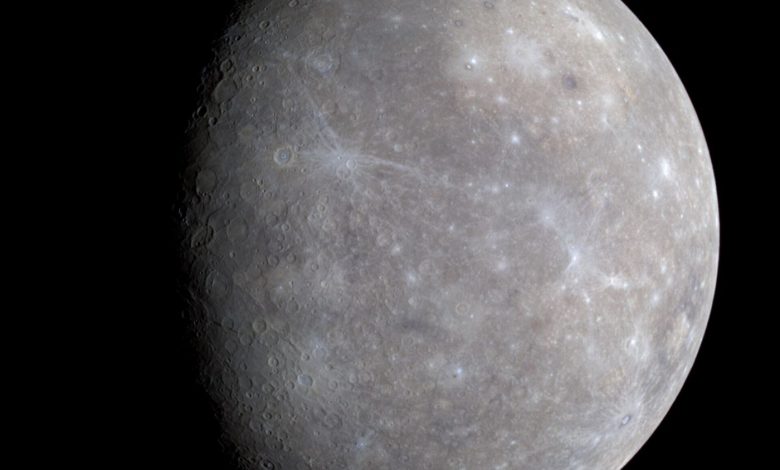
An X-ray telescope travelling to Mercury has captured its first observations after eight years and 10 billion kilometres in space. The instrument, the Mercury Imaging X-ray Spectrometer, known as MIXS, was built in Britain and travels aboard the BepiColombo mission, a joint project of the European Space Agency and the Japan Aerospace Exploration Agency. Scientists at the University of Leicester, which leads the European consortium that developed MIXS, said the telescope detected X-rays from the Crab Nebula, about 6,500 light-years away. The observations ran for 39 hours on 11 and 12 September 2026, with the spacecraft making 55 controlled changes in orientation. The results were reported on 20 November 2026, just as BepiColombo prepared to enter orbit around Mercury on 21 November. MIXS is the first imaging X-ray telescope to fly on a planetary science mission.
What the Evidence Shows
The first look was a calibration test, not a picture of Mercury. The Crab Nebula is one of the brightest X-ray sources in the sky and a well-studied object, so observing it lets the team measure how well the telescope works in space and compare the results with calibration tests done in a laboratory in 2015. The early results are encouraging: the telescope’s resolution in space is slightly better than it was on the ground. MIXS could not look into space until September, when the mission’s transfer module separated from the two science orbiters and uncovered the telescope for the first time since launch. Once in orbit around Mercury, MIXS will map the elements on the planet’s surface by measuring fluorescent X-rays released by rocks after stimulation by solar X-rays, helping scientists understand the smallest and least explored rocky planet in the solar system. Reporting and analysis from sources such as Nature track the same developments, and specialists following the MIXS X-ray telescope say the direction is now consistent across independent lines of evidence.
The Wider Context
The wider context is a research landscape in which replication and open data now decide reputations. Findings connected to the MIXS X-ray telescope are being checked by independent groups with shared datasets, and the teams involved publish their methods in full so rivals can test every step. That discipline is slower than a headline cycle, but it is why results in this area increasingly survive first contact with scrutiny.
What Happens Next
What happens next in the story of the MIXS X-ray telescope will be decided by follow-up work already under way: larger samples, longer observation and instruments that have not yet come online. The researchers involved are unusually united on one point, that the current results justify the next investment of time and money. Readers will not have to wait long for the first tests of that claim. You can follow related developments in our coverage of science.
None of this will be settled by a single announcement, study or product launch. The pattern to watch is accumulation: independent confirmations, honest reporting of failures and steady improvement in the underlying numbers. Readers who follow those signals, rather than the loudest claim of the week, will understand this subject better than most of the commentary surrounding it suggests is possible.